
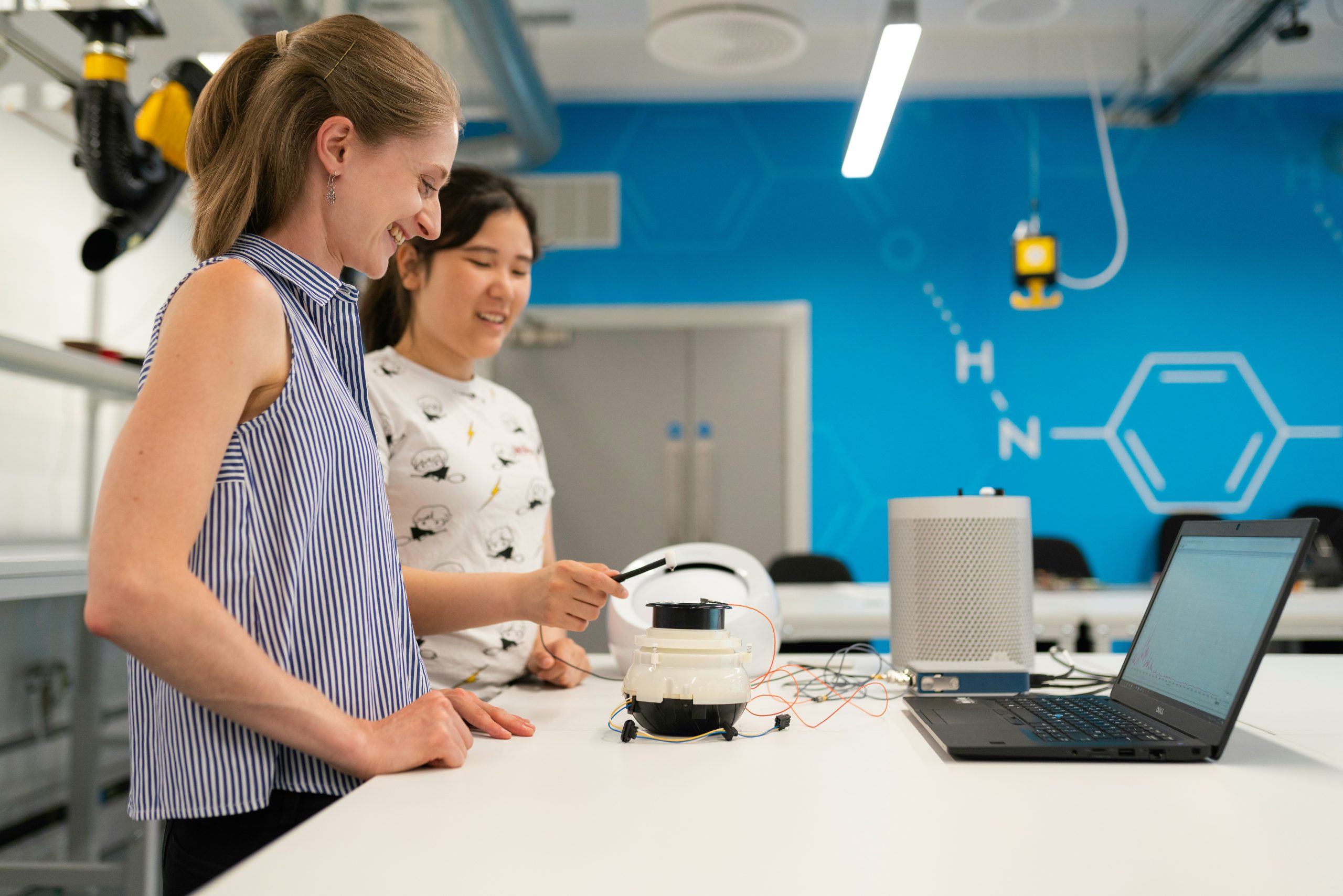
On 11 February each year, the world marks the International Day of Women and Girls in Science, a United Nations-designated day recognising the vital role women play in science, technology, engineering and mathematics – collectively known as STEM.
For business operators it’s a timely reminder that women remain significantly underrepresented in the industries that design, build and scale the technologies shaping our economy. This article will highlight the contribution of women to STEM innovation, and how the talent of women in business can be better utilised.
What Is STEM — and What Do STEM Industries Do?
STEM covers four interconnected fields:
- Science – research, health sciences, biotechnology, environmental and climate science
- Technology – software, artificial intelligence, digital platforms and cybersecurity
- Engineering – infrastructure, energy systems, advanced manufacturing and robotics
- Mathematics – data science, modelling, analytics and forecasting
In practical terms, STEM professionals design and manufacture the systems we rely on every day. They build medical devices, renewable energy infrastructure, transport systems, digital financial services, health technologies, construction materials, defence technologies and education platforms. These industries are responsible for some of Australia’s highest-growth, highest-productivity sectors.
The Gender Gap in STEM
Despite the rapid growth of STEM fields, the composition of the workforce does not represent the wider population they are designing for.
In Australia, women make up nearly half the population, but women hold approximately 15–27% of STEM roles, particularly in engineering, technology and advanced manufacturing. The gap starts early, with fewer girls studying physics, IT and advanced mathematics at school, and it widens over time as women leave STEM careers at higher rates than men [Source: Australian Department of Industry, Science and Resources]. For businesses already struggling with skills shortages, this is a costly loss of talent.
Why Women in STEM Matters for Innovation
When women are not engaged with STEM, products are designed without women’s perspectives. Systems are built around assumptions that don’t reflect diverse users. Entire markets can be underserved.
When women lead and participate in STEM businesses, the opposite happens. Innovation improves. Products better reflect real-world needs. New markets open.
This is apparent in sectors including health technology, financial services, education technology and climate solutions – areas where women often experience problems differently and can identify unmet needs that others overlook.
Women-Founded STEM Businesses: Australian and Global Examples
Australia has a growing number of women-led STEM ventures that demonstrate the impact and potential of female leadership in innovation. Catriona Wallace founded Flamingo AI, developing advanced AI and chatbot solutions for enterprise clients, becoming one of the first women-led tech companies listed on the ASX. Tan Le co-founded Emotiv, a neurotechnology company developing EEG headsets for research, health, and education applications. Mikaela Jade founded Indigital, an augmented reality edu-tech company bringing Indigenous stories and cultural knowledge into mainstream learning. Dr Morley Muse and Dr Ruwangi Fernando co-founded iSTEM, a talent-sourcing company improving diversity in STEM employment, particularly for women and people from diverse backgrounds.
Globally, women are also innovating with successful business models utilising STEM as a core part of their modelling.
In the United States, Whitney Wolfe Herd founded Bumble, a technology company that redesigned online dating by putting women in control of the dating experience. Built on behavioural science and platform technology, Bumble grew into a global public company and expanded into networking and social connection products.
In Asia, Roshni Nadar Malhotra leads HCL Technologies, one of the world’s largest IT and engineering services firms. Under her leadership, HCL has expanded its digital, cloud and engineering capabilities from India across global markets.
In Saudi Arabia, Lubna Olayan has played a central role in scaling Olayan Financing Company into the Middle East, with investments across energy, industrial technology and infrastructure – sectors traditionally closed to women.
In Cameroon, Rebecca Enonchong, founder of AppsTech, built a global enterprise software and IT services company operating across Africa, Europe and the US, helping businesses digitise operations and access global markets.
In Peru, Patricia Patiño co-founded Laboratoria, a technology education and workforce platform that trains women in software development and places them into tech roles across South America, directly addressing the STEM talent gap while scaling a sustainable business model.
Finally, in the UK, Stemettes, founded by Anne-Marie Imafidon, runs programs, hackathons, and incubators to get girls into STEM careers, with corporate partners like Microsoft and Salesforce supporting initiatives.
How Business Can Support Women in STEM
Women in STEM present a business opportunity.
Businesses can support women in STEM by broadening how they recruit and develop talent, including return-to-work pathways for women with technical experience. Reviewing workplace structures – flexibility, leadership development, and progression criteria – can dramatically improve the retention of women. Involving women in product design, testing, and decision-making ensures that products and services meet the needs of diverse users. Most importantly, businesses that invest in leadership capability, not just technical skill, are better positioned to retain talent by providing opportunities to upskill and progress into roles where they shape strategy, innovation, culture and product development.
How Impact Business School Supports Women in STEM
Impact Business School designs and delivers practical learning solutions that strengthen leadership capability, inclusion, and performance across organisations. We actively support women in STEM through our role as the official learning and DEI partner for the Australian Tunnelling Society Mentor Alliance, and by contributing as a guest speaker with Delve Underground’s Women in Science and Engineering Network.
Our impact centres on supporting women to thrive professionally and in leadership. We do this through executive coaching, evidence-based resource kits, and industry-aligned microcredentials that build confidence, capability, and long-term career momentum.
Want to learn more about how Impact Business School supports women in STEM? Keen to explore how your organisation can strengthen its leadership, inclusion, and innovation capacity? You’re invited to book a conversation with Patricia Kaziro, Director of Global Learning Solutions.
